

What My Body Knew, Before My Head Caught Up
Notes on drawing, dysregulation, and the pattern I didn't plan to make
Last week I found myself drawn to a mug ring on the outdoor table – a perfect round shape fading as it got towards the centre. From there I had the urge to start drawing circles and colour them in with watercolour pencil.
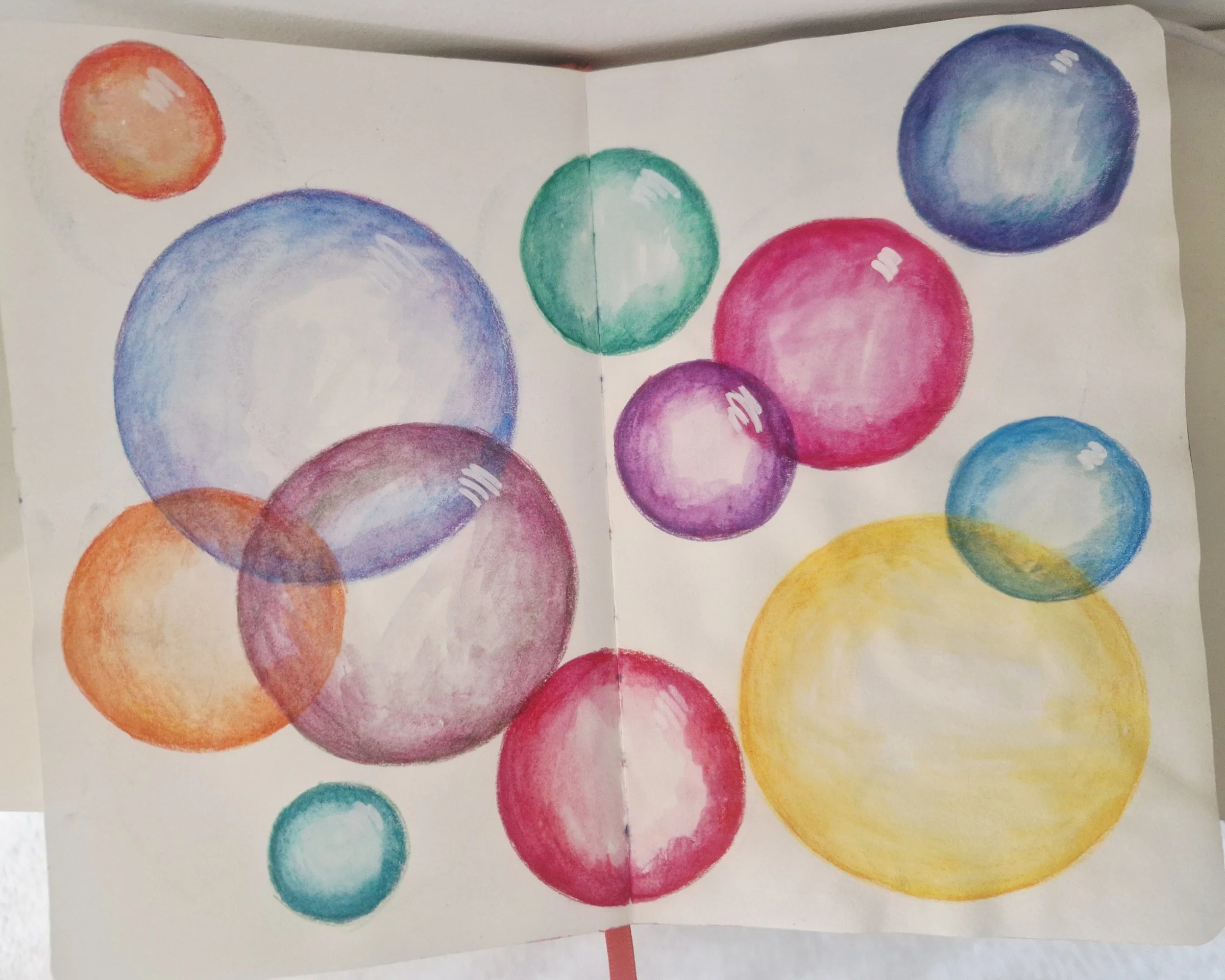
A quiet evening in on my own, the TV on in the background, drawing and colouring in overlapping circles. After a full-on week (and one where I decided to go back for therapy) my mind settled and my nervous system was soothed.
I was then drawn (no pun intended) to making ‘De Stijl’ patterns – the overlapping lines and circle artworks popularised by a group of Dutch artists and beloved by the hospital art group I volunteer at.
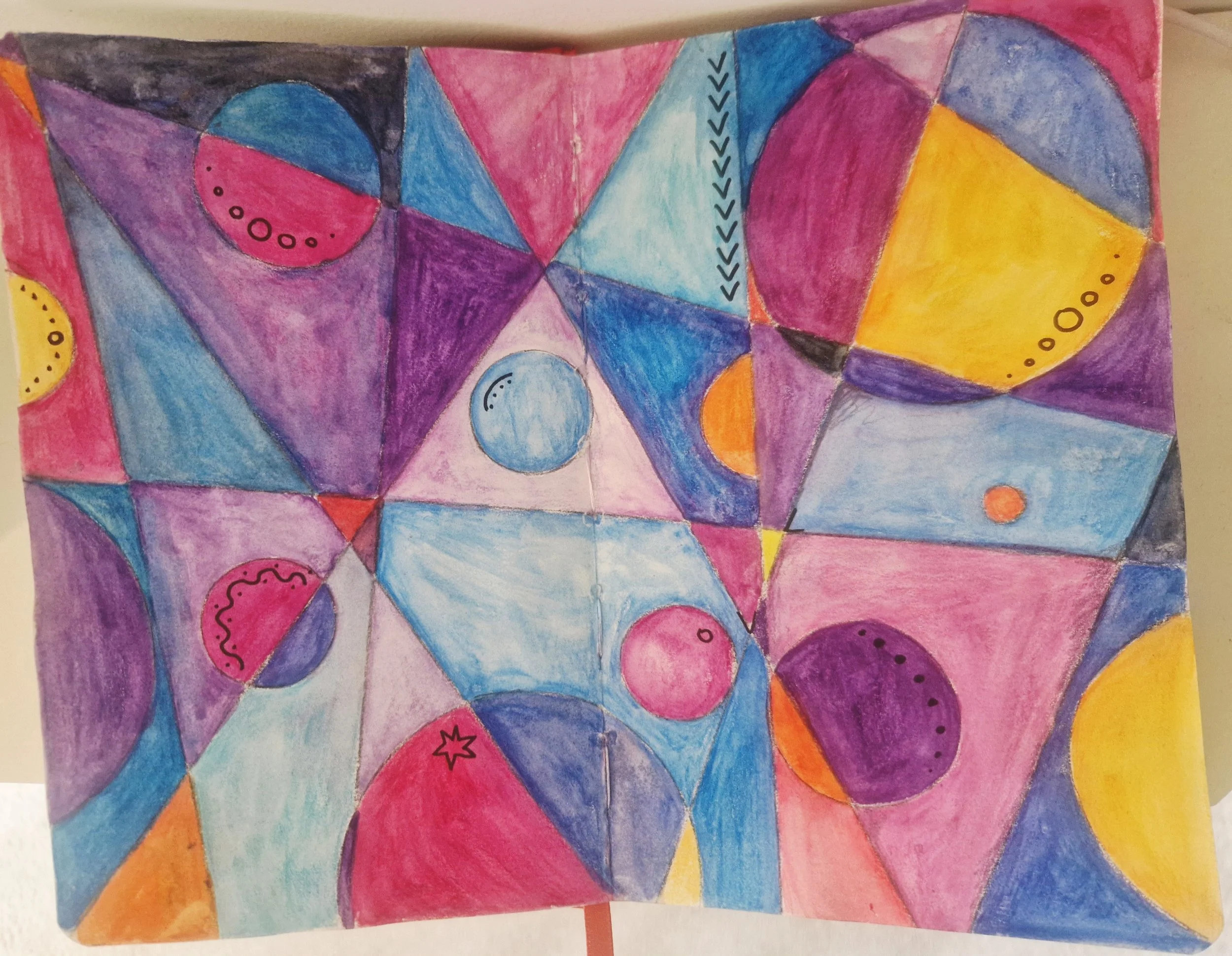
‘De Stijl’ watercolour drawing
This is quite structured art making as opposed to the paint pouring and organic forms I also enjoy. During a dysregulating time, my hands reached for order, not chaos. In a period where I’m learning about nervous system regulation, my mind remembered what my body has known its whole life ...
... drawing is soothing.
I’ve loved drawing for as long as I can remember. It’s why I wrote about the actual physical process of drawing – that my hands need resistance and movement, not just selection and fill on an iPad – in my piece about finding your art style (link here).
There’s research behind this too, arriving well after my body already knew it. Structured, contained mark-making – think mandala colouring rather than a blank page – has been shown to lower anxiety more than open-ended drawing does. Even just the physical act of making art, regardless of skill, measurably lowers stress hormones. My nervous system didn’t need the studies. But it’s nice to know it wasn’t just me.
And maybe that’s the real thing I keep circling: the nervous system doesn’t just want structure – it wants structure it made itself. Not someone else’s template. My own circles, from my own mug ring.
Most of us inherently know this about art too. But the issue, as Picasso quite rightly said:
“All children are artists. The problem is how to remain one when we grow up.”
Children love to paint and draw. Art is inherently therapeutic, as multiple studies have shown. But it seems that when stress appears in our adult lives, we forget. I’m guilty of this too. I think that art ‘has to have a purpose’, a ‘message’, be a ‘finished, polished piece’ to have any worth – and that’s with five years of art therapist training! This is where the line between art therapy and art as therapy is constantly, confusingly blurred.
All I know at the moment is that art can be the process rather than the product. Art is an extra tool we can have in the nervous-system-soothing kit. It doesn’t have to go anywhere, mean anything. It’s just the body knowing instinctively what it needs. And for us to have the trust in it.
Have you ever caught your hand making a pattern before your head decided to? What art materials do you reach for when you need soothing?