

Ten Years of a Project I Didn't Know I Was Building
(or: What Make.Believe.Creative Actually Is)
Make.Believe.Creative has been in my head in some form since I finished my Art Therapy MA 10 years ago (although the name for it came much later). As with most things that matter too much, I kept not quite starting it. I wrote around it. I made art adjacent to it. I began this Substack, which was supposed to be about illustration, and found it kept pulling toward something else.
Recently I did something useful: I wrote it down. Not the idea, but the shape of it — and found, slightly to my surprise, that the shape was already there. I’d been building it all along.
So: here is what this project actually is, as clearly as I can say it.
The reader
I write for a specific person. They’re a creative introvert — more likely to process things through making than through talking. They use art, or want to, as a way of navigating difficult emotional states: depression, shame, disconnection, loss. They have probably been told they’re too sensitive. They almost certainly feel, at times, that they’re both too much and not enough at once.
I know them well because that’s me!
The framework
During my MA, and following my dissertation, I developed a model called ESCAPE — a framework for understanding how creative practice can alleviate depression. It maps onto six areas: Expression, Self-Esteem, Connection, Acceptance, Play, and Emancipation. The posts on this Substack, though I haven’t always named it this way, have been quietly filling in that map.
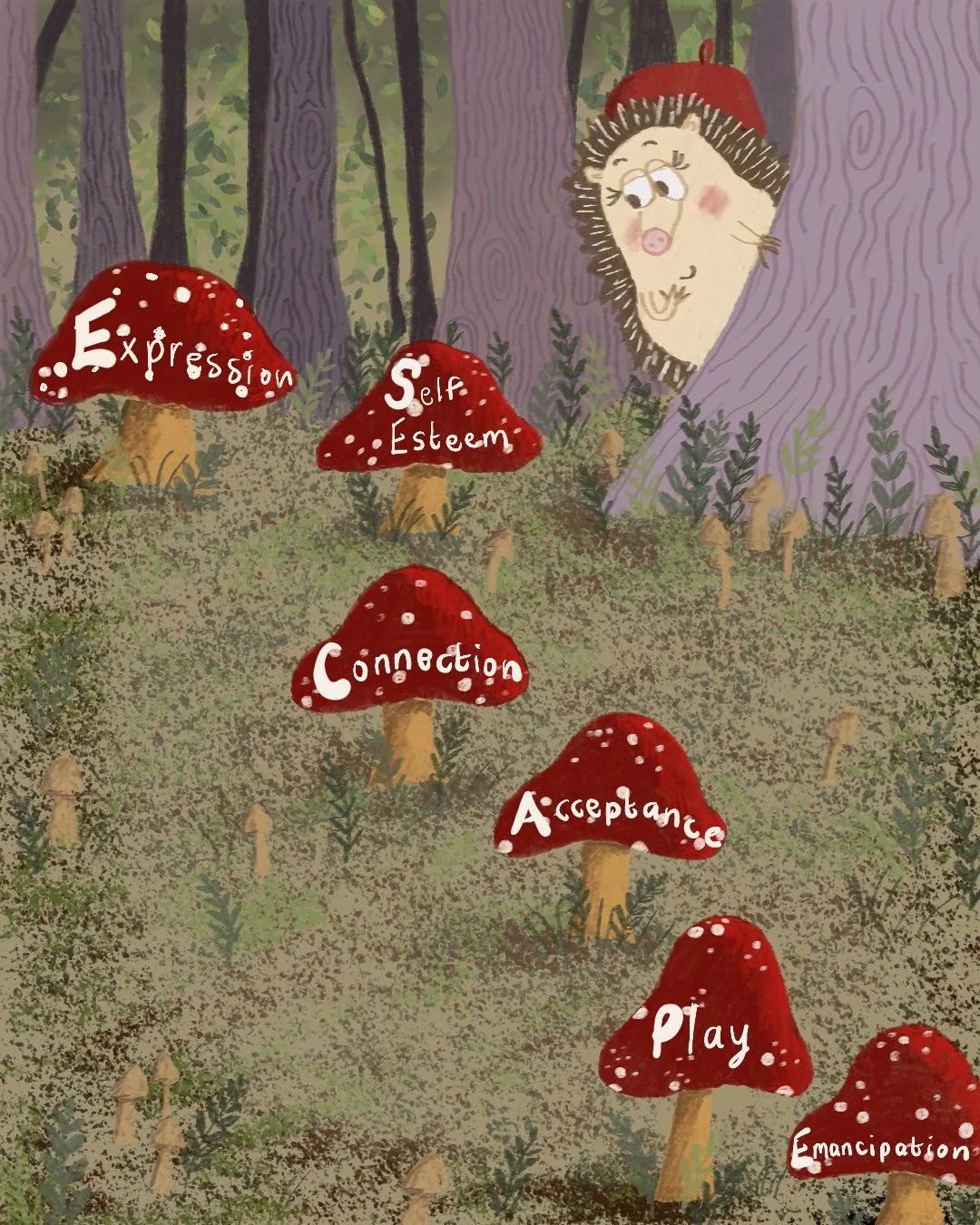
I’m not a practicing Art Therapist anymore — I trained, but I work in administration, volunteer in the arts, and illustrate in the hours left over. What the MA gave me is a particular way of seeing: a set of lenses for understanding what making does, psychologically, and why it matters beyond aesthetics or commercial success.
I’ve been reluctant to say this plainly, in case it sounds like a credential I’m hiding behind. But it’s more honest to name it. These aren’t just personal essays about creative life. They’re informed by ten years of reading, training, and thinking about why art helps — and by a lot of personal experience of needing it to. My previous article ‘Why I’m not writing this as a therapist’ gives more information on this.
The characters
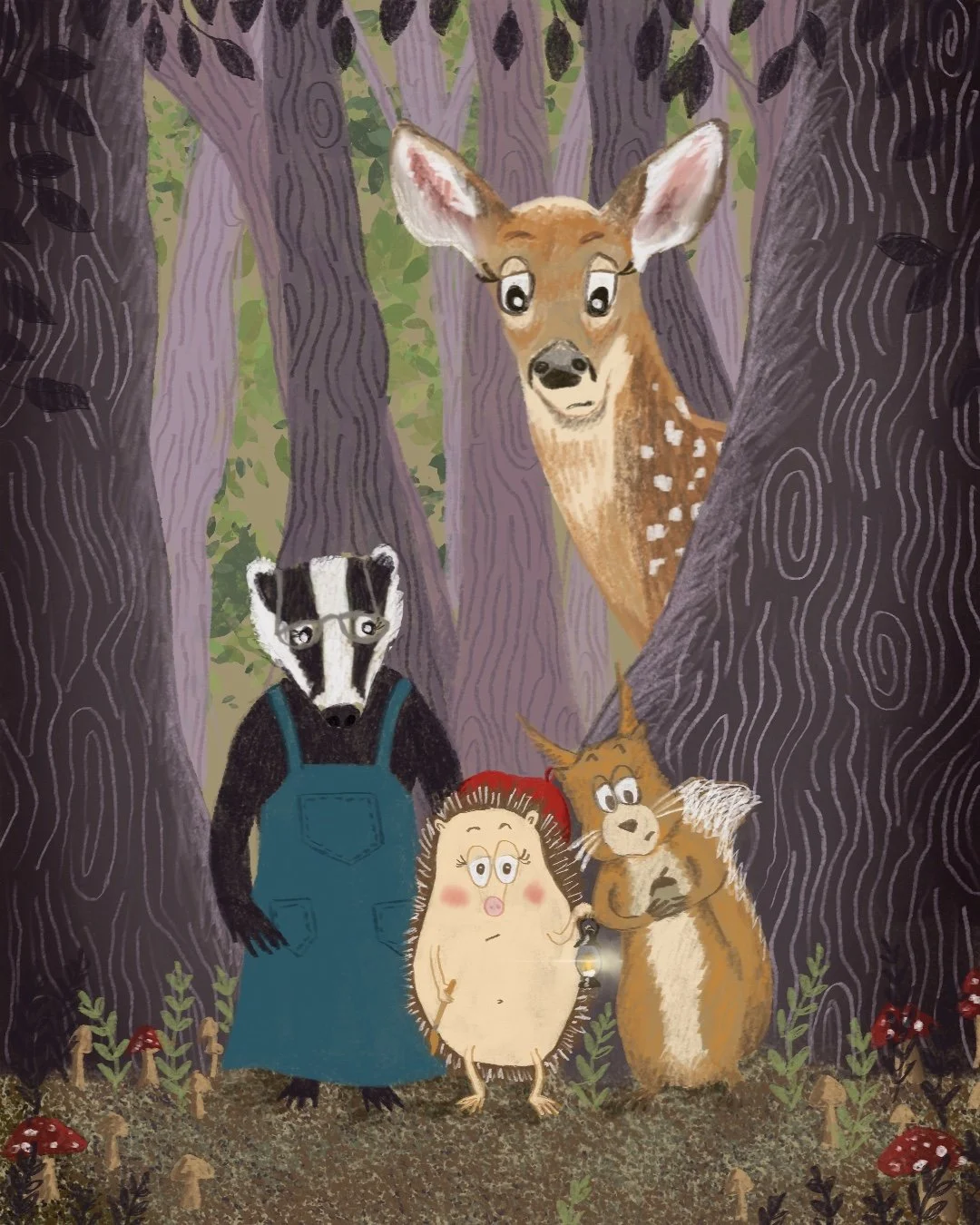
Tiggle, Hester, Merrin, and Bramble live in Lantern Wood. They arrived while I was drawing — or rather, they were always there, and I found them when I started paying attention. They’re illustrated emotional states, or parts of a self, or folk-tale creatures navigating a dark forest. All of the above.
They matter because metaphors get into rooms that direct language can’t. That’s something else the MA taught me.
Where this is going
Eventually — once this is less of a Substack and more of a body of work — I think it wants to be a book. Maybe a card deck. Definitely a set of ideas that could be useful to people who find conventional self-help books make them feel worse.
For now, it’s this: writing and drawing that tries to name the hard things, with enough theoretical grounding to be useful and enough personal honesty to be real.
If that’s the kind of thing you’re here for, I’m glad you’re here.