

The portfolio I didn’t know I was building
Learnings, direction, and what AI helped me see about my own work.
The moment I decided to take becoming an illustrator seriously, one word loomed ahead of me like a fog bank: portfolio.
To become someone who can be paid for their creative work, a portfolio — an actual website (Instagram will not cut it!) — is non-negotiable. I knew that. What I didn’t know was quite how much mental weight that word would carry.
The second term that loomed was style. “You have to be consistent” was preached everywhere, by everyone in the industry. Finding your style becomes like a search for the holy grail — and the trouble is, “style” is such a slippery thing to pin down. I looked at my body of work (I’d made a lot of it, because the standard advice is make a lot of work and you can’t help but find your style) and I couldn’t see any themes or consistency. I felt all over the place.
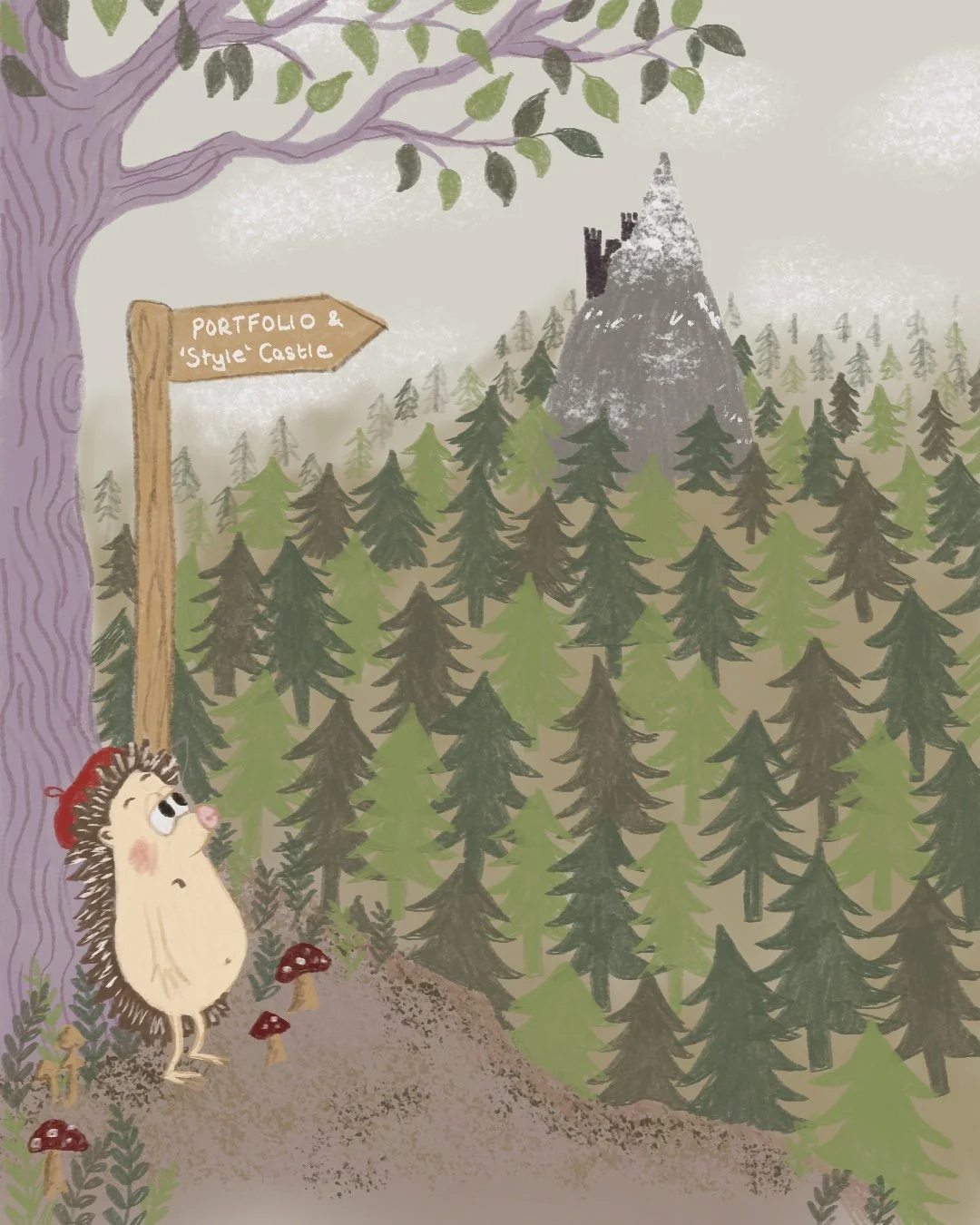
I started to think of my portfolio as a mountain I had to deliberately climb, plan for, work towards - and consistently! Every time I thought of it as a project, I felt overwhelmed, discouraged, and lacking in motivation. The number of resources for learning Procreate alone is enormous, and I felt I wasn’t using it to its full potential. I kept thinking I needed to try more things, experiment more, be more.
What I didn’t realise — and what’s taken months to see — is that I’ve been working on my portfolio all along. I just couldn’t see it.
My blog and Substack as portfolio
When I started this blog and Substack newsletter, I knew instinctively that I wanted to illustrate it. I’m an illustrator — the visual is my language, alongside the written. I’ve made minimal use of stock illustrations and instead started developing my own cast of characters and settings. I also knew I wanted to focus on the psychology and emotional side of creativity, given my personal history, and background with art therapy.
Tiggle the hedgehog has grown organically out of that. She’s become a kind of archetype for me — shy, sometimes solitary, quietly overprotective, but brave when it matters. Her friends are a timid doe and a scattered squirrel (names still TBC!).
As seems customary in 2026, I turned to AI to help me see through the confusion — and it’s been genuinely useful. My new friend Claude 😉 (goodbye Chatgpt!) helped me see something I’d been missing:
“The Substack piece is your natural creative engine right now. Whatever that next article is about, the illustration for it is portfolio work. Stop treating them as separate.”
That reframe landed. I’d been holding “portfolio work” and “Substack work” as two different things, one serious and one not — when actually, every illustration I make for an article here is demonstrating my voice, my characters, my themes. It counts. It all counts.
If you’re a creative who also writes, makes content, or runs any kind of online presence: the work you’re already doing is probably more portfolio-relevant than you’re giving yourself credit for.
Refining my style and re-thinking the market
Here’s an assumption I’d been carrying without examining it: because my characters are a bit silly, a bit childlike, they must belong in children’s books. Simple, right?
Except that assumption may have been quietly blocking me.
When I uploaded some of my work to Claude the response reframed it in a way I hadn’t expected:
“You’re not ‘whimsical’ in the greeting-card sense. You’re doing something much more interesting: illustrated emotional metaphor using anthropomorphic woodland characters. Think somewhere between Beatrix Potter’s psychological depth, the warmth of Jon Klassen, and the therapeutic visual language of someone like Liz Fosslien.”
I had to sit with that for a moment. It felt true but I hadn’t really been able to fully see it.
That’s not to say children’s books are off the table — I have character and story ideas I haven’t fully explored yet, and my instinct is that my work would suit older children, or the kind of crossover illustration you see in books like Robert Macfarlane’s. But it’s also pointing me toward something I hadn’t considered clearly before: seasonal and folkloric lifestyle illustration, work that speaks to adults through an emotional, character-driven lens.
I’m not fully honed in on my markets yet. But I’m much less confused than I was.
What’s actually shaping my style
Something that’s helped enormously — though I couldn’t see it at first — is narrowing down my materials and colours. There’s real truth in limitations foster creativity. There are so many brushes in Procreate that it can feel paralysing, and for a long time I didn’t know where to start. Eventually I narrowed it to my favourites.
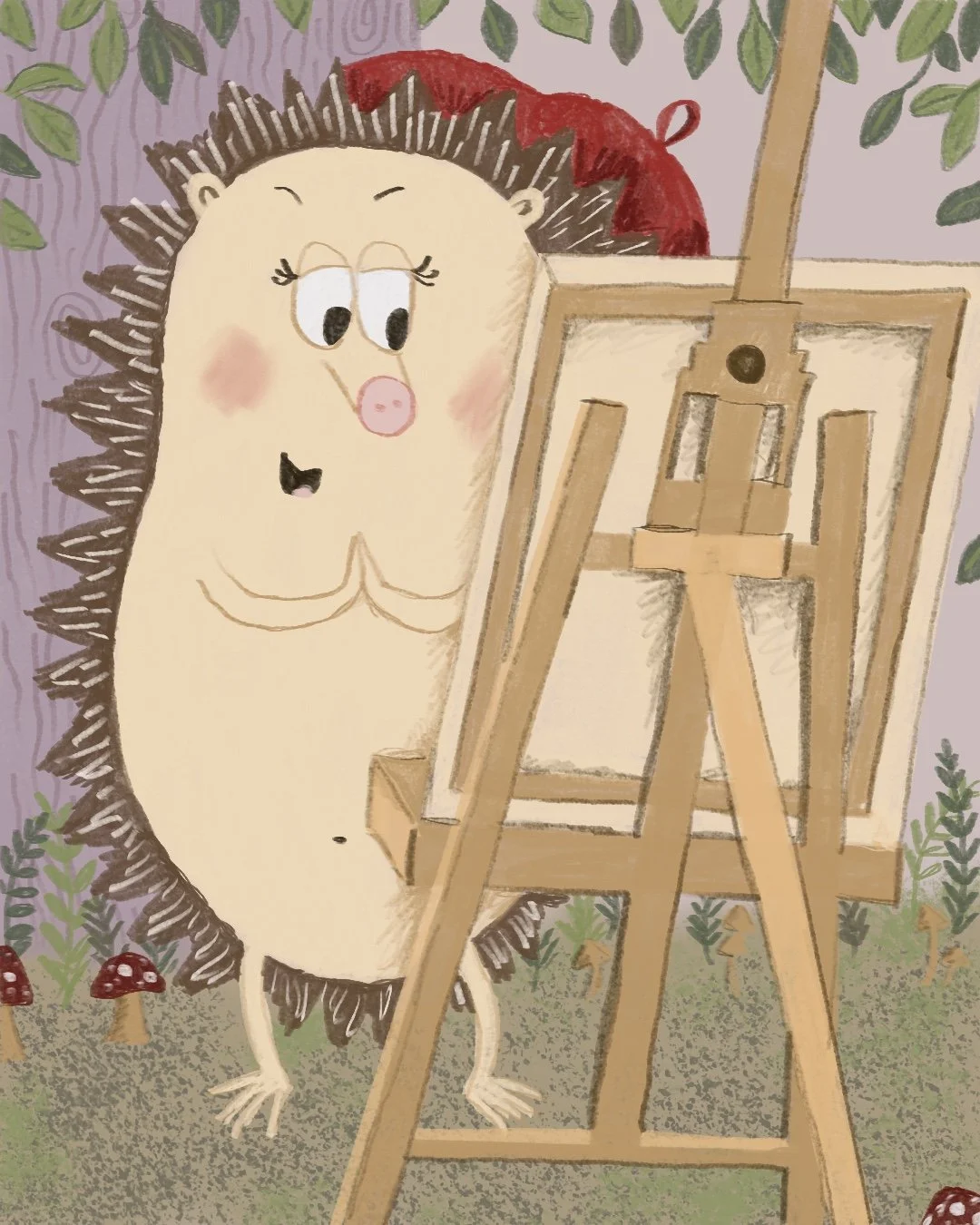
What I kept coming back to was this: I love drawing. The actual physical (or digital-physical) process of it — the feel of the pencil, the mark-making, the layering. It soothes me. I’m not interested in flat vector illustration or drag-and-drop colour. I want to draw! And the Waratah pencil in Procreate, which feels smooth and creamy and builds up in layers, is what gets closest to that feeling for me at the moment.
The result, apparently, is what Claude described as “textured, layered work that reads as almost painterly — there’s grain, depth, visible mark-making.” That resonated. That’s what I’m going for.
There was also a useful (if initially deflating) piece of honesty:
“Your work is not flat/graphic. It’s not minimalist. It’s not cute-kawaii. It’s not editorial-sharp. These are important things to know because they tell you which markets to stop considering — sleek tech editorial, greeting card factory work, corporate infographics. Not your world.”
At first glance, those seem like where the money and trends are. But I’ve never been able to follow trends, and I don’t think I should try. What actually opens up when you lean into what’s authentically yours is a different set of possibilities — and for me, those include art prints and cards, illustrated gift products, picture books for the 7+ age group, and illustrated non-fiction for adults.
That list feels liveable. It feels like me.
What I’m focusing on now
For the rest of the year, my portfolio aims have become more specific:
Creating new work that shows narrative sequence or implied story
Incorporating more human elements into my pieces
Demonstrating more seasonal range — particularly spring and summer
Developing a clearer colour palette (this will be hard; I love all the colours)
Working on character proportions and backgrounds
These feel manageable. Not a mountain. More like a series of hills I can actually see the top of.
If you’re in a similar place — staring at your own work and not quite knowing what you’re looking at — I’d say this: the clarity does come. It comes from making work, yes, but also from stepping back, getting outside perspective, and being willing to question the assumptions you didn’t even know you were carrying. AI is a good start for this if you want to use it, or show your work to a fellow artist, teacher, or mentor to get their perspective. In the future, I’m going to consider getting a portfolio review to hone this even further.
I’ll be writing more about the specifics as the year goes on. In the meantime — what does your portfolio mountain look like right now?