

On credentials, grief, and writing from inside the experience rather than above it
There’s a unique thing about this publication. I write about the emotional life of creativity, about what it costs to make things and keep making them, and I draw on Art Therapy frameworks to do it. I trained as an Art Therapist. I completed an MA. I worked with clients.
And I’m not a therapist.
I’m not being coy about that. It matters, and I think you deserve to know why – not as a disclaimer, but because the story of how I got here is part of what shapes how I write.

What I expected, and what actually happened
I started the Art Therapy MA in 2011. I’d spent years before that working steadily, building towards it – part-time jobs, voluntary work, the slow accumulation of hours that would get me onto the course. I arrived with genuine passion for the subject and a belief that this could be the work I was meant to do. I’d decided that because I’d had lived experience of mental health that this was a way to give my life, and what I went through, purpose.
Art Therapy isn’t gentle work. It operates at the level of the unconscious, and it asks the practitioner to hold a great deal – the client’s material, the transference, their own responses to all of it. There’s a reason that students are required to be in their own therapy throughout the training, to undertake group supervision, to engage in experiential art-making. The course knows what it’s asking of you.
What I wasn’t prepared for was that the most difficult material wouldn’t come from the clients.
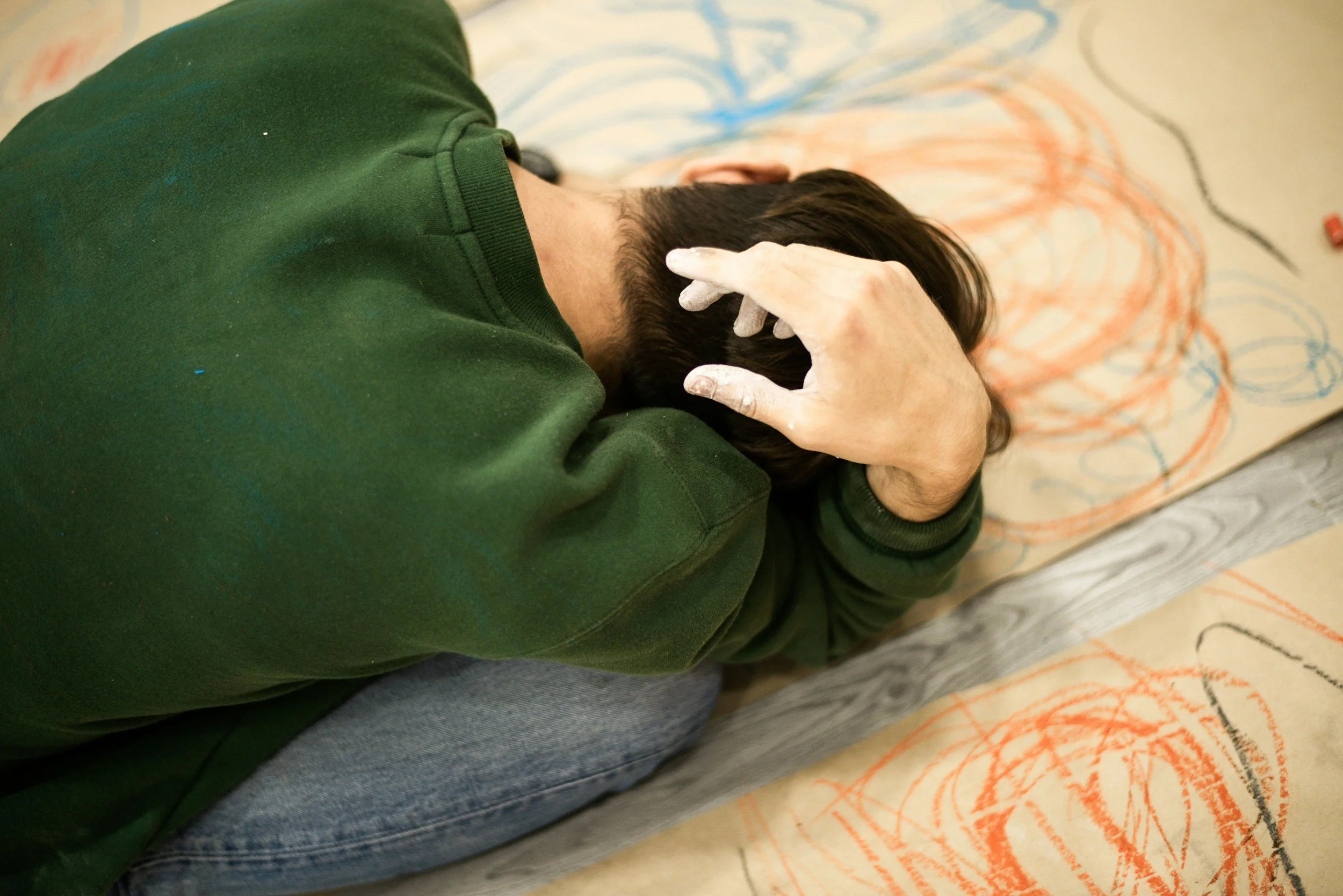
The clients were, in many ways, the part that made sense. The tutors and the institution were something else entirely. I won’t go into detail – partly because I’m still processing it, partly because I have no interest in making this a litany of grievances. What I will say is that I had to change universities partway through the training, which is an extraordinarily disruptive thing to do mid-MA. What should have been three years took five. I emerged the other side not just tired but genuinely wounded by the experience – and carrying a weight of unprocessed material that I hadn’t walked in with.
The HCPC – the body that regulates allied health professionals – requires therapists to be ‘fit to practise’. I wasn’t. Not then. And the HCPC, having correctly identified that threshold, makes it remarkably difficult to re-register once your registration has lapsed. That door, for now, is closed.
The other thing I discovered
The other thing I discovered
There was a second realisation, quieter but equally honest: client work, as a sustained practice, isn’t well-suited to how I’m wired.
Working with children, and adults with learning disabilities, I’d find myself at the end of a session feeling genuinely depleted – not just tired, but emptied. The constant attunement, the tracking of transference and countertransference, the holding of another person’s emotional world in real time: it asked something of me that I didn’t have in consistent supply. You can know a lot about what a role involves and still have no way of knowing how it will actually feel until you’re in it. That’s not a failure of preparation. It’s just the limit of what imagination can tell you.
I’m still glad I found this out. It’s useful to know.
The grief, and what was underneath it
I’m still grieving this, if I’m honest. Not constantly, not dramatically – but it surfaces. The version of myself who was going to be an Art Therapist was a version I’d held for a long time. She had a title, a clear purpose, a legitimate place to stand. Letting her go has taken longer than I expected.
What I’ve come to understand – slowly, with help – is that I was asking the job title to carry a lot of my self-worth. The credential was supposed to prove something: that I was serious, that my interest in the inner life was valid, that I had the right to speak about these things. Without it, I’ve had to find another way to know that.
I’d also gently suggest – having been on the inside of it – that for anyone drawn to becoming a therapist it’s worth asking themselves why with real honesty. Not to talk themselves out of it, but because the unconscious reasons often matter as much as the conscious ones. I think this topic should be part of every Art Therapy introductory course.

So where does that leave me?
So where does that leave me?
In a strange position, honestly. I’m not a therapist, and I’m not going to write as though I am. I won’t diagnose, treat, or suggest that reading this is a substitute for actual support. If you’re carrying something significant, please find someone to carry it with you – I know that’s not always straightforward or affordable in the UK, but it matters.
What I do have is this: the training, the frameworks, the genuine depth of engagement with why images and making things work on us the way they do. And I have the lived experience of someone who’s been through difficult things and is still in the middle of figuring them out. I write from inside the experience, not above it. That’s not a lesser position. For some readers, it might actually be more useful.
If you’ve ever found yourself holding knowledge you couldn’t quite find the right container for – qualifications that didn’t lead where you expected, expertise that doesn’t sit neatly on a CV, a sense that you’re still figuring out what you’re actually for – then this might be a familiar feeling. I don’t think it means the knowing was wasted. I think it means we’re still finding where it belongs.