

Meet the residents of Lantern Wood (and why they live in my head)
Some characters arrive before you know what you need them for.
When I started documenting my illustration journey, I knew I wanted to illustrate the articles too — I mean, I’m an artist, right? But Make.Believe.Creative began as a vague intention more than a plan: write and draw about creative mindset, courage, the messy interior of making things. I didn’t really know what I was doing, only that I needed somewhere to practise being seen. The Good Ship Illustration, whose courses I’d really recommend, talk about finding your ‘freak flag’ — the thing that’s specifically, unusually yours. Two years ago, when I first encountered that idea, I genuinely had no idea what mine was. These characters crept up on me while I wasn’t looking. Now I think they might be it.
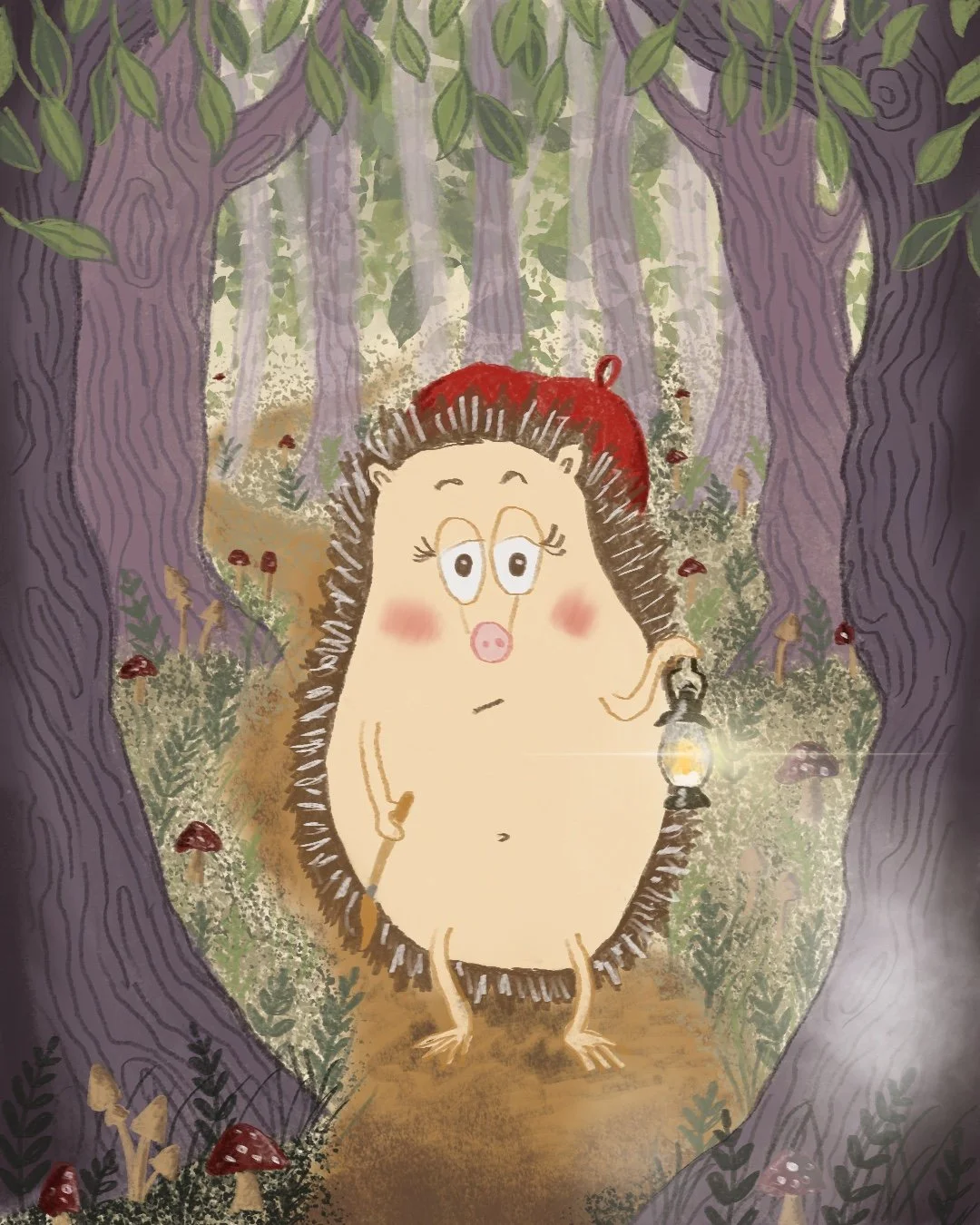
Tiggle appeared in a sketchbook in 2024. I can’t really tell you why — I’d been playing with woodland ideas, thinking about shyness and bravery and what it means to be both at once — and suddenly there she was. A hedgehog. Already anxious. She started sometimes carrying a lantern that felt like both a comfort and an admission: I can only see this far. The rest is dark.
I’ve worked with images for long enough to know that when something arrives that specifically, you should probably pay attention to it.
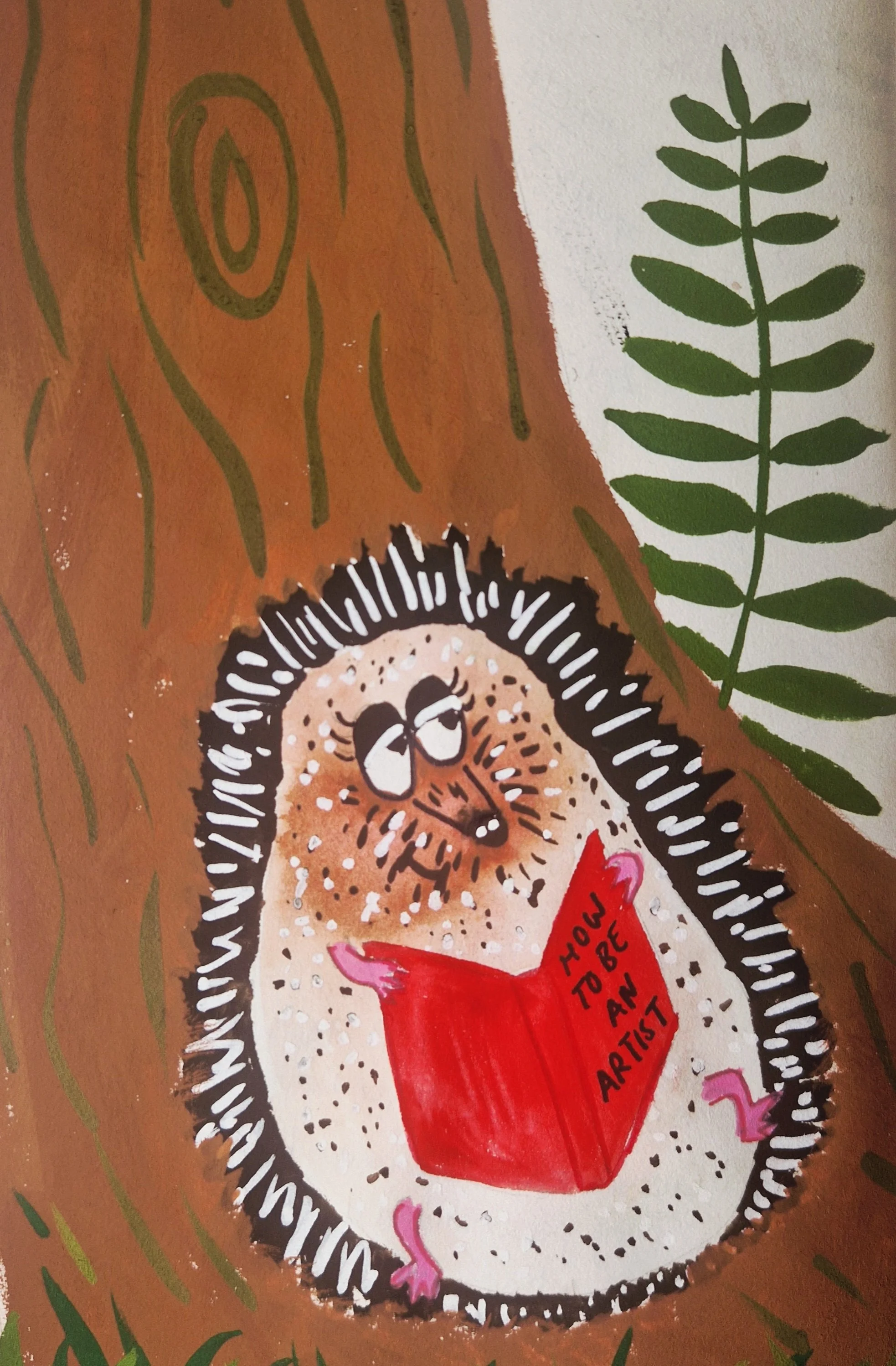
The very first iteration of Tiggle
One of the things I learned during my Art Therapy training is that metaphor gets into rooms that direct language can’t. Stories and symbols offer what therapists sometimes call therapeutic distance — a little breathing room between you and the thing you’re trying to look at. You can pick up a feeling, examine it, put it down again. You’re protected by the fiction, even when the fiction is completely transparent.
Folk tales have always understood this. Small creatures carrying large burdens. Animals navigating dark forests and uncertain terrain. The hedgehog who curls up when threatened but, quietly and determinedly, keeps moving anyway. These aren’t just charming details — they’re a way of saying things that resist being said directly.
Beatrix Potter understood it. The German word for hedgehog is Igel. Somewhere between Mrs Tiggy-Winkle and an AI conversation about character names, Tiggle arrived.
Tiggle the Hedgehog
Hedgehogs are solitary and sensitive. They avoid loud noises and open spaces. When threatened, they curl into a ball — which is either a defence mechanism or a very relatable response to an overwhelming inbox, depending on your week.
But they’re also quietly tenacious. They navigate dark, dangerous terrain at night to find what they need, facing predators and difficult conditions without any particular fanfare. Cautious, but not stopped.
I’d like to think I’m generally brave when I need to be. I’ve navigated depression, bullying, my mother’s illness and death while working in a hospice, an Art Therapy degree that cracked things open, and more than one employer who mistook my quietness for compliance. [I’ve faced the kind of things that require quiet courage rather than visible heroics] These things required a particular kind of courage — the unglamorous, undramatic kind that doesn’t look like bravery from the outside.
What still frightens me, though — properly frightens me — is taking my art seriously as a purpose rather than a pastime. Which is apparently the next thing I need to do. So, Tiggle is a metaphor, yes. The most see-through metaphor I’ve ever made.
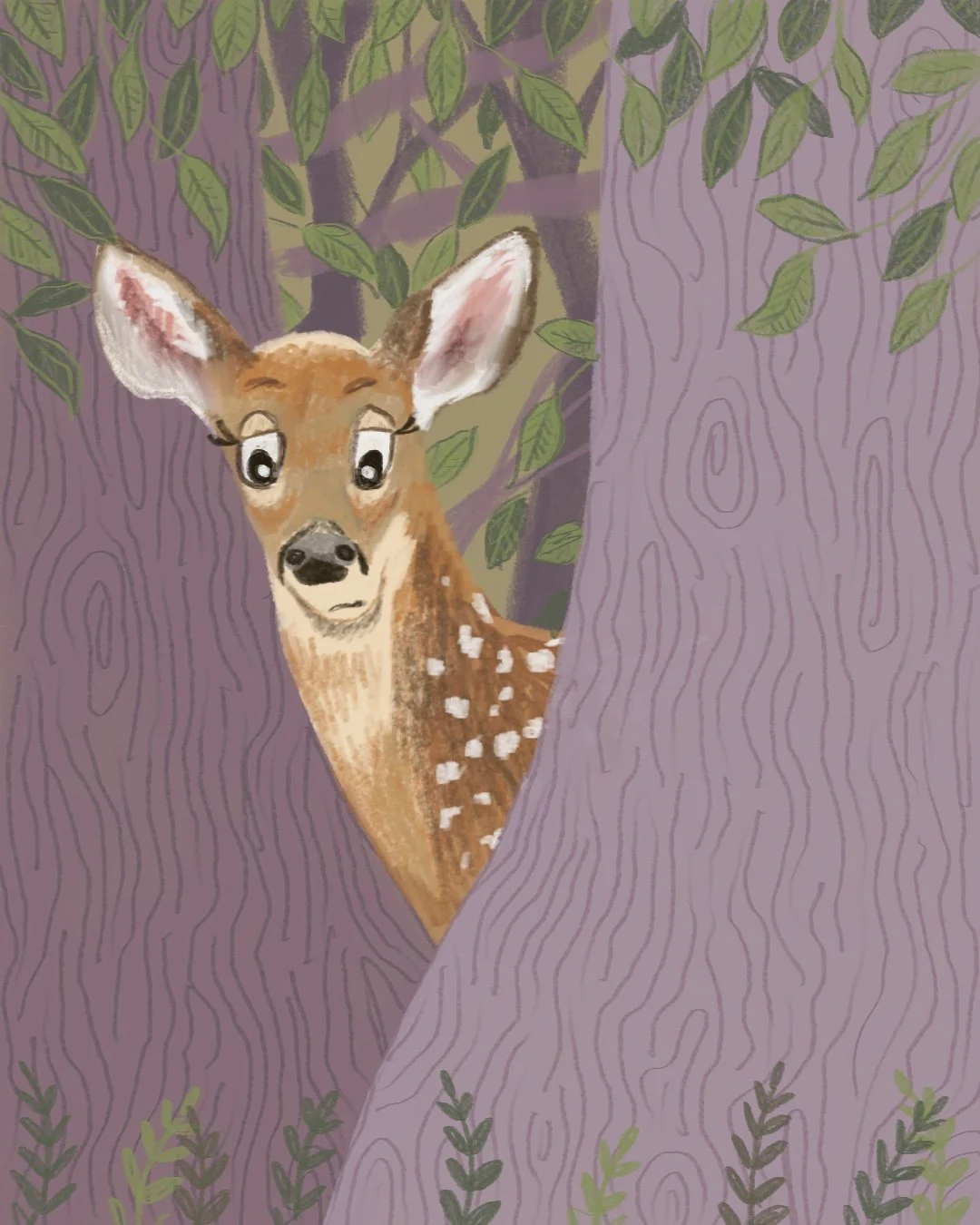
Hester the Doe
Deer are exquisitely sensitive to their environment. Highly alert, reliant on stillness and camouflage, constantly reading the air for threats that may or may not be coming.
Hester is my protective part — the one who stands at the treeline, checking before stepping forward. In IFS terms, she’d be a protector. She’s not irrational. She’s doing exactly what she was built to do. The question is whether she’s sometimes protecting me from things that are no longer dangerous.
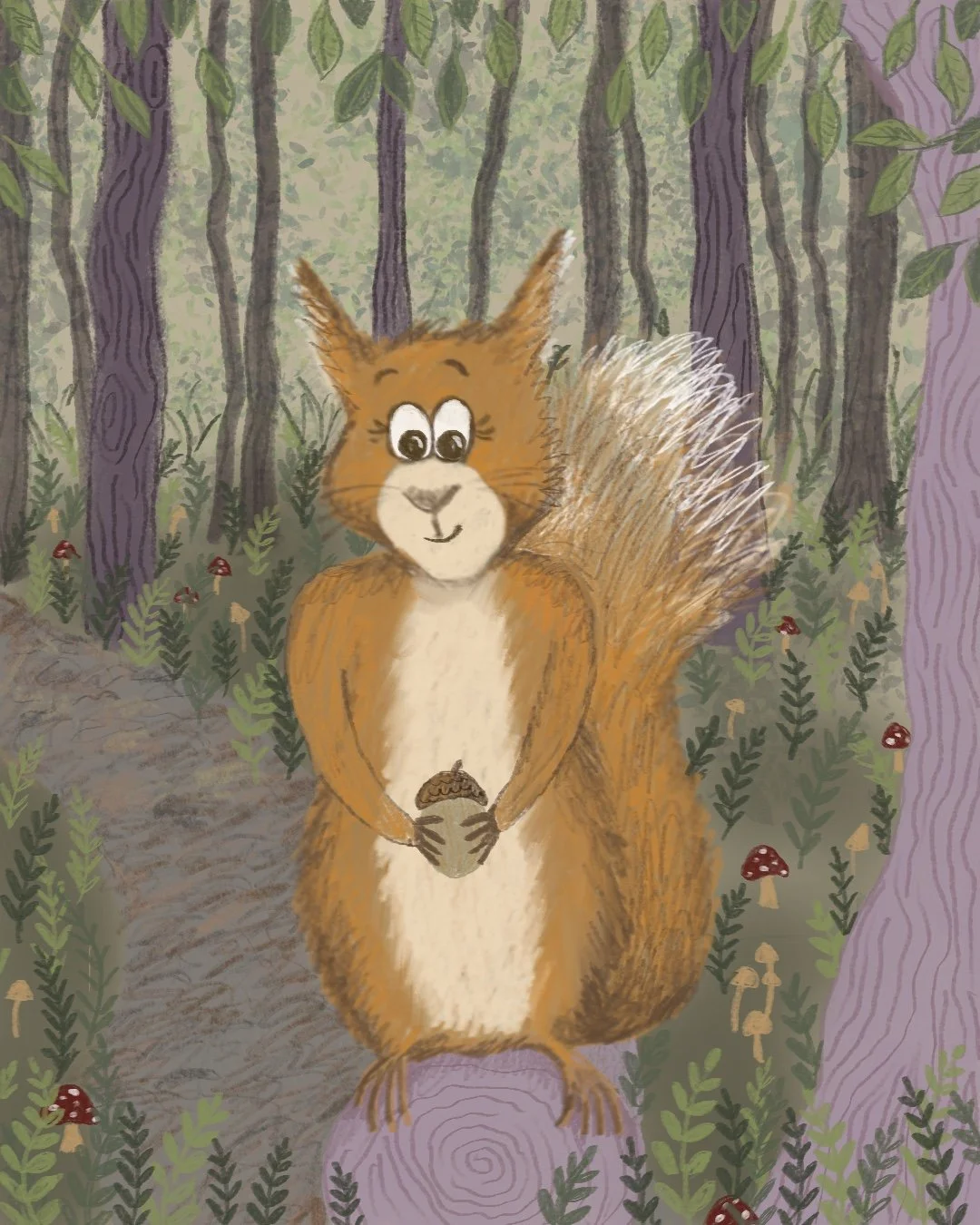
Merrin the Scattered Squirrel
Squirrels have a reputation. Always acquiring, always cataloguing, always convinced there’s another nut somewhere that needs to be secured before you can rest.
Merrin is my striving self — the one who gets distracted by ‘shiny object syndrome’ and immediately worries whether he should be doing what everyone else is doing. He arrived when I noticed how exhausting it was to be permanently mid-leap between one thing and the next. He just doesn’t quite believe that what we have is enough.
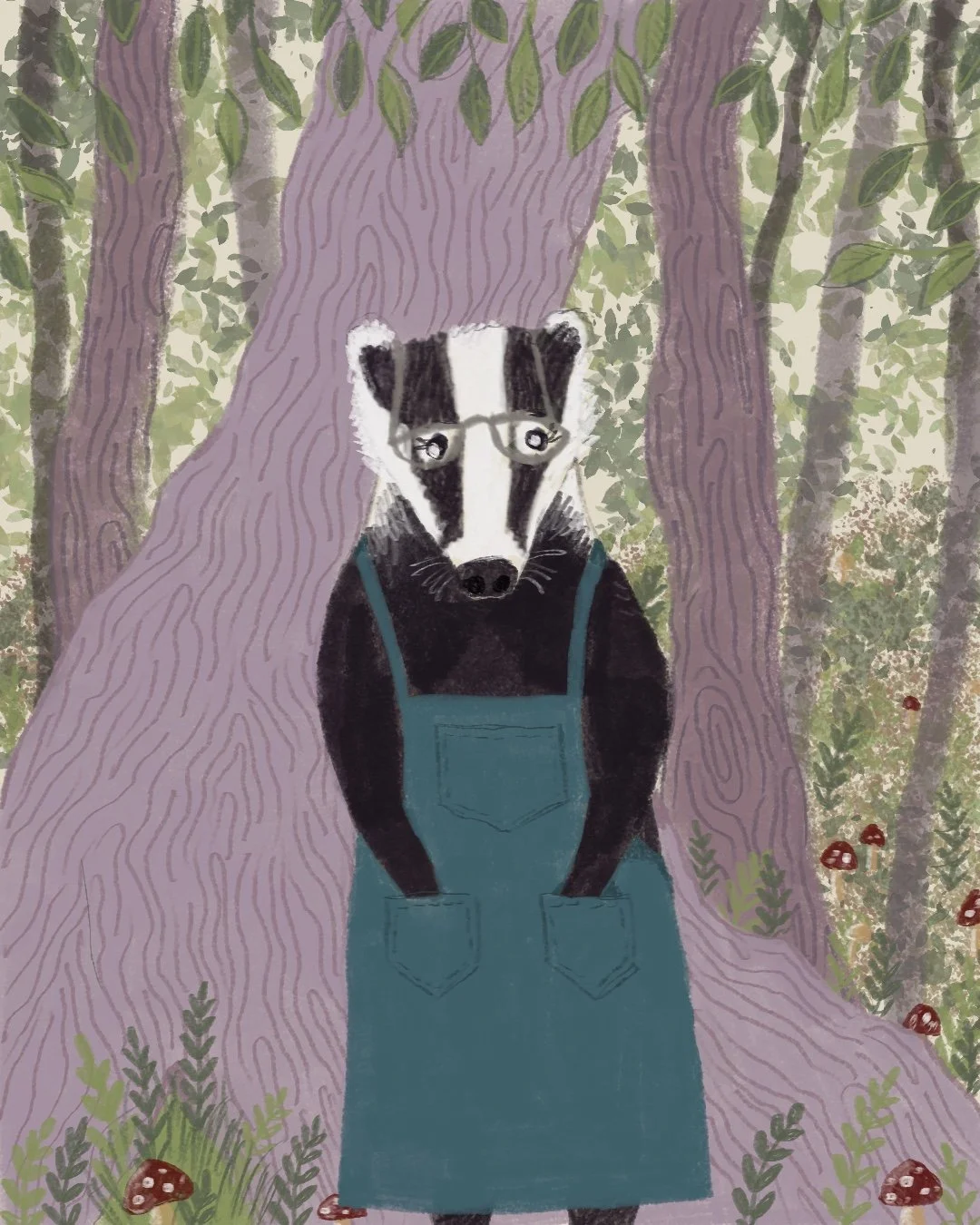
Bramble the Badger
Bramble is the wise old sage of the group. Steady, observant, a little slow to arrive — but when he does, he tends to see clearly. If you’re familiar with ACT therapy, he’s something like the observing self. In IFS terms, he’s close to what’s called the Self — the part that can hold all the other parts with some equanimity.
He’s busy a lot. He doesn’t always notice immediately when perspective is needed. But he gets there.
Lantern Wood
The characters live in Lantern Wood. When I named it, I was thinking about lanterns and forests and the particular quality of light that only reaches so far — which felt right for characters who are all, in their different ways, trying to see clearly in the dark.
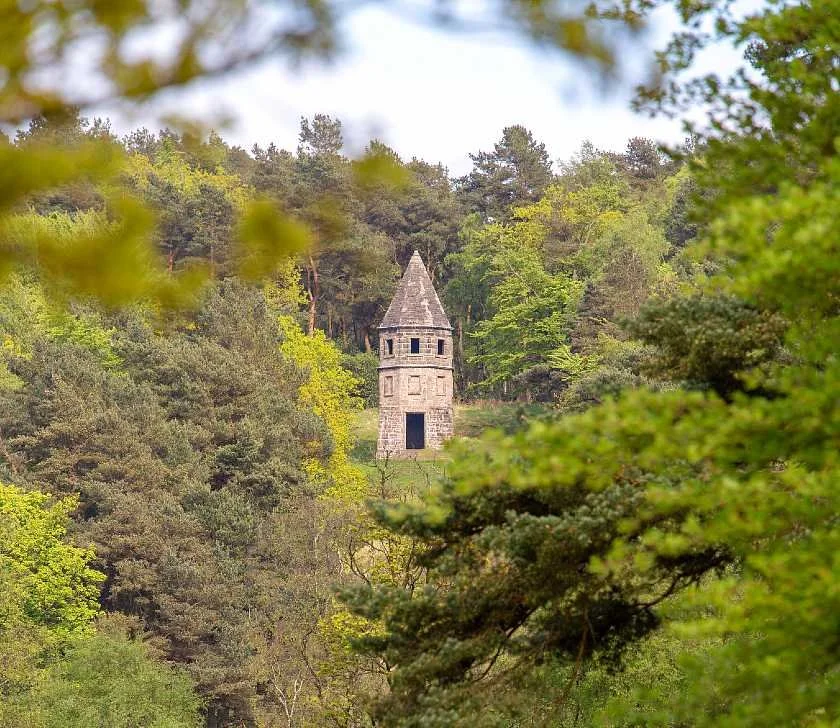
I discovered later that Lantern Wood is a real place. It’s in Lyme Park, in Stockport, where I live. There’s a folly called the Lantern, and the woods around it are known by that name. I hadn’t known this when I chose it.
I choose to find this serendipitous rather than coincidental, because that’s the kind of person I am.
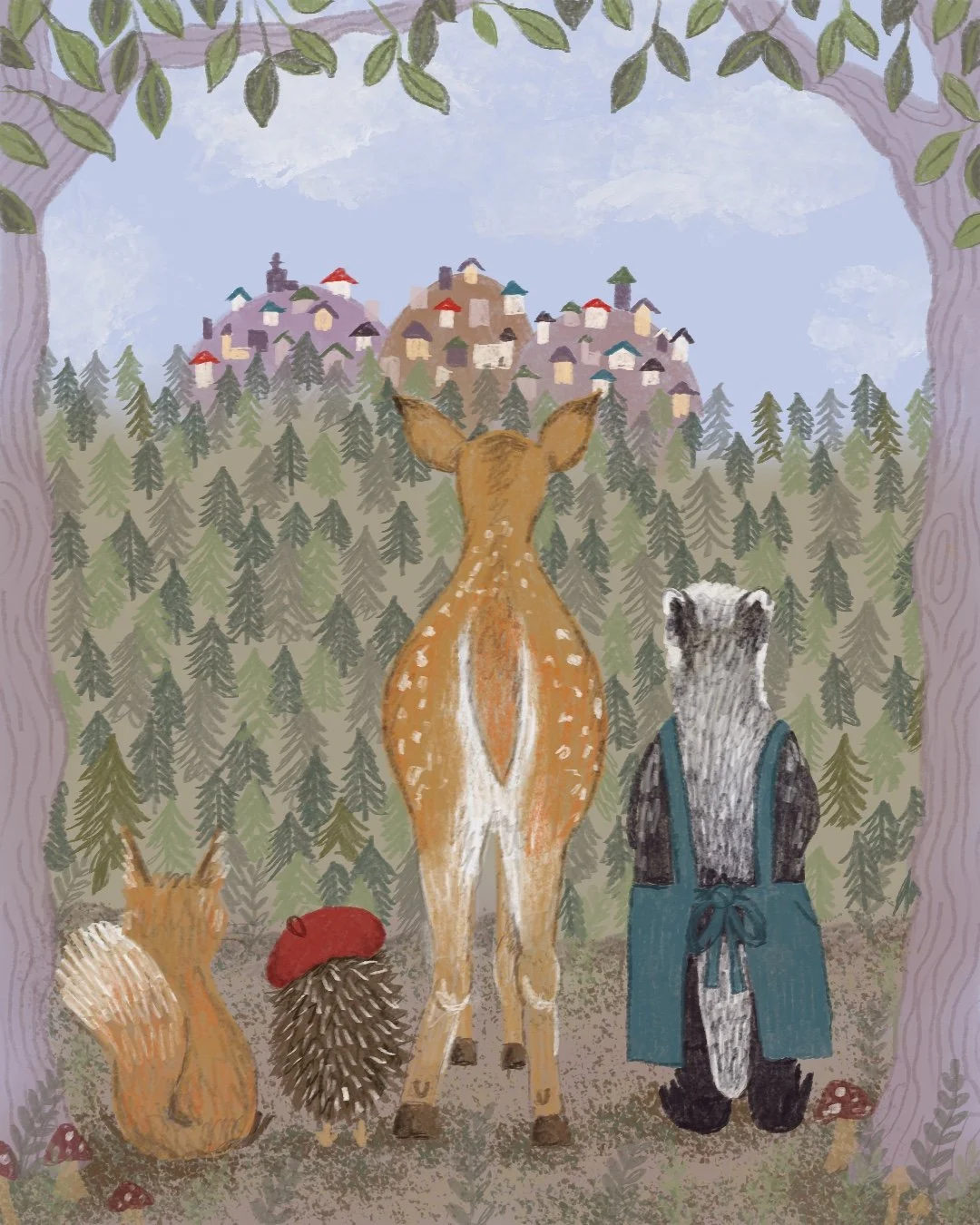
Lantern Wood is a sanctuary, but it has a limited audience. If these characters — and the person drawing them — are going to realise what they’re reaching for, they’re eventually going to have to venture out into the wider world. Risk being seen. Question what they think they know about themselves.
That’s the story. It’s also, rather obviously, mine.
I’m curious — do you have internal characters, or parts of yourself that you’d give a name and a species to if you could? What would they be?