

On stalling, the fear of being seen, and a doe caught in the headlights
I remember the playground at my new school. I was six, trying to join a game of chase, with two thoughts running at once: I don't fit in, and I mustn't be too loud, too needy, too try-hard or they won't like me. So I did what I would go on doing for decades. I pushed myself down and back. Not enough, yet somehow too much.
I still feel it in my body, that urge to get smaller, to fade away, when an interaction turns stressful.
Part of my tagline here is for the creative who feels both too much and not enough at once. Today I want to write more about what that means for making things, especially the stalling, which is exactly where I am right now. (It also follows on from my last article, on why finding your authentic self isn't as easy as it sounds.)
For a long time I only recognised the "not enough". It's only recently that I've realised I fear being "too much" as well.
Without going into detail about my childhood, here's how I've come to understand it, with thanks to therapy and a lot of reading. When the adults around a child find their independence, creativity and expressiveness hard to tolerate, the child learns that being fully themselves is the problem: too much. Meanwhile their real needs, for consistency, respect and being chosen, go unmet, and that gets filed as not enough. Both messages arrive together.
So where does that leave us as artists?
The fear of visibility has the same shape. Sharing my illustration work sets off both alarms at once: what if it's too much, and what if it isn't good enough? A part of me learned that being seen risks both punishments, so it keeps everything contained. From the outside that looks like stalling, second-guessing, procrastination, spinning my wheels. On the inside it feels like Hester, my timid doe, frozen in the headlights.
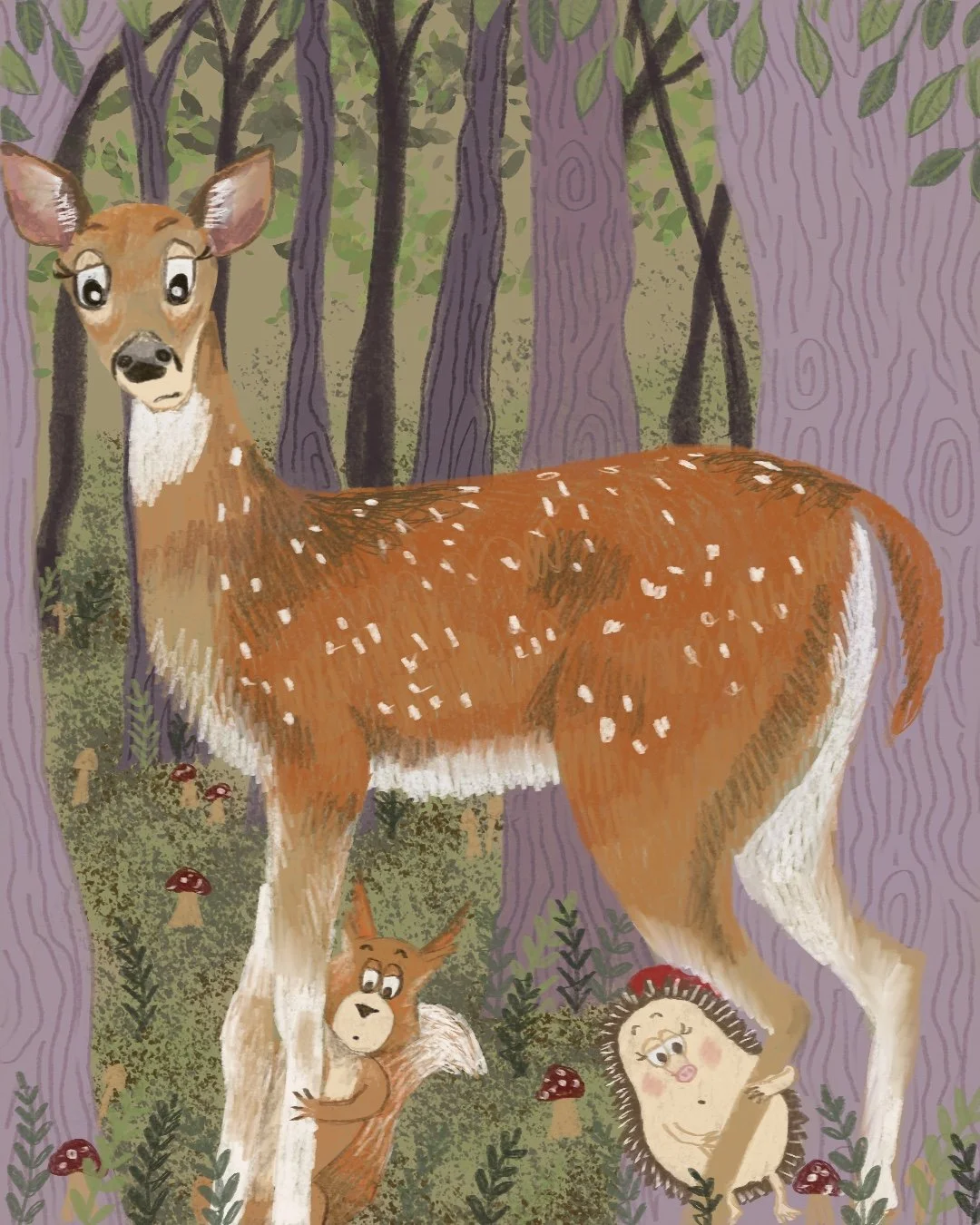
In Internal Family Systems terms, Hester is one of my protective parts. The work isn't to overpower her. These parts formed because I was overpowered. It's to help her trust my Self enough to step back and let it lead. Perhaps that's why I spend so much time with the animals of Lantern Wood: I'm trying to build a relationship with these parts rather than wrestle them.
It's softly, softly work. Hester needs to learn, gradually, that things are safer now than when I was small. Meanwhile Merrin, my striving squirrel, is the hare of the story. He wants to race ahead, and he burns out. Tiggle is the tortoise, although she's a hedgehog and I'm choosing to ignore that. She takes her time and builds a foundation that will stand her in good stead for the life ahead.
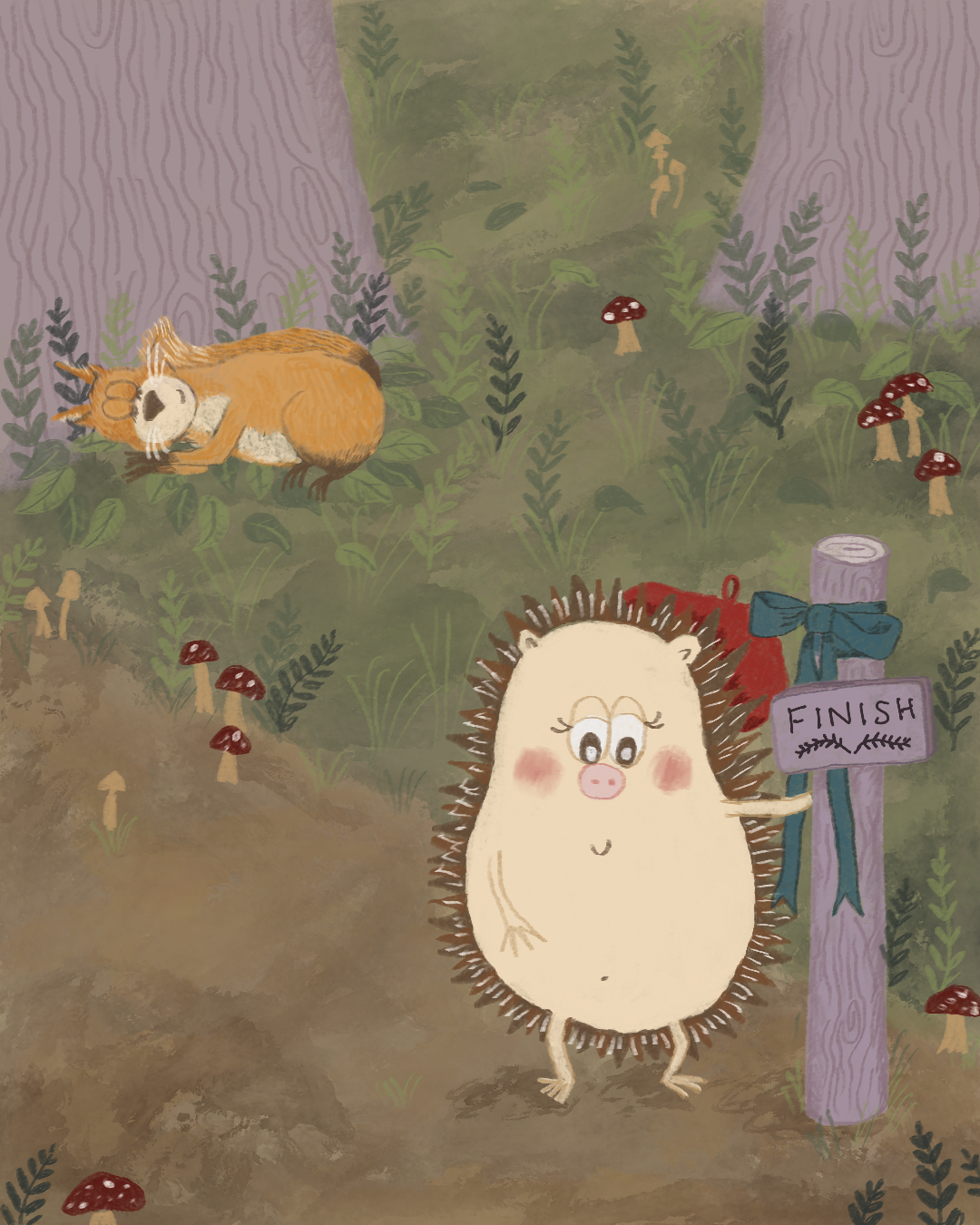
I'm still stalling, if I'm honest. But writing this was a small step out of the headlights, with Hester watching rather than driving. And I'd rather stall with company than push myself back down again.
If you recognise any of this, what does your "too much" or your "not enough" most want you to know?