

Is Artistic Talent a Myth? What Practice, Courage, and Uncertainty Have to Do with Creativity
Many of us decide surprisingly early whether we are “creative” or “talented” — and then spend years believing that verdict. But what if talent is far less important than we’ve been taught to believe?
It isn’t that the ‘talented’ “know” what they are about to do as much as that they are willing to start something and see where it leads them. We, however, tend to focus on their results and ignore the struggles, uncertainties, and false starts. And so the gap between us widens, although, the real difference between those we think of as talented and ourselves may be nothing more than their willingness to go forward in the face of the uncertainty, if only because they believe in the skills they know they can bring to bear.
(On becoming an Artist by Ellen J. Langer)
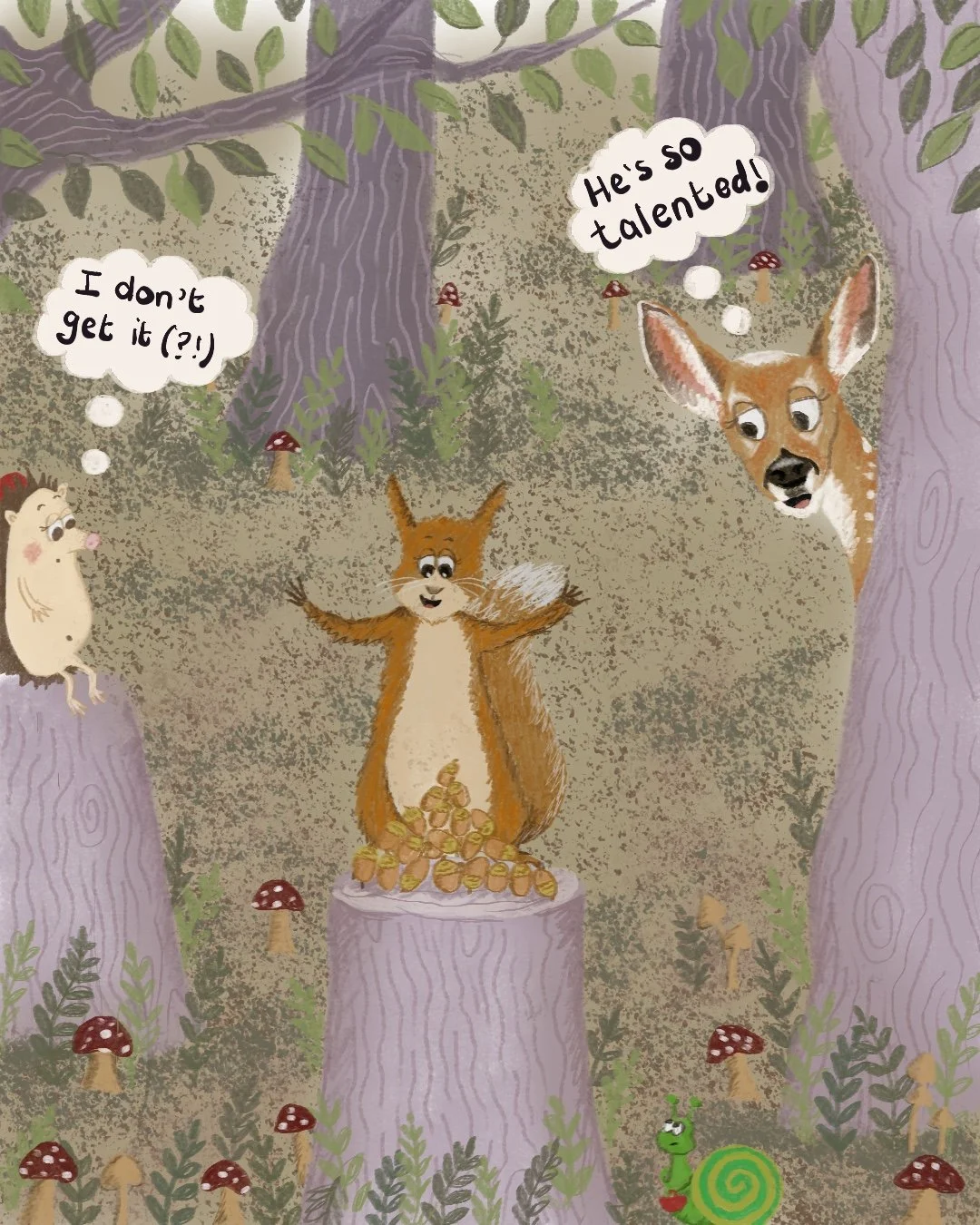
Talent (much like art) is subjective…
I remember learning this lesson much earlier than I realised. I was on holiday at my grandparents’ house. My cousins were also visiting, and we were making get well cards for my Grandad, who had been ill. We were all absorbed with white paper and felt tips. I was about 5, so my cousins must have been 8 and 10. I remember looking at their cards with envy and frustration — they were so much better than mine, their colouring so much neater, the lettering so much more sophisticated. Compared to theirs, mine felt like a jumbled mess. I’d seen their work and so desperately wanted to recreate it, but I just wasn’t there developmentally.
My Dad tried to explain how, because they were older, my cousins were always going to be ‘better’ than me at drawing. As a young child I couldn’t understand that their motor skills were more refined because of their age. I just thought that they had more talent than me.
But drawing mattered to me, so luckily I kept practicing. Now, after (many!) years, I’m willing to bet I’m a better artist than my cousins, who don’t do much art now. My family may say I am “talented”, but isn’t it just as possible that I kept showing up?
My Mum reckoned she did not have an ‘artist’s bone in her body’, that she couldn’t ‘even draw a straight line’ (if you want to draw a straight line be an architect! 😉 ) I only wish she had lived long enough for me to get my iPad then I could have shown her that will draw a straight line for you, if you want! Mum, and lots of other people I know, think that artistic talent is innate. I would argue that the passion for drawing and painting (or ceramics, or textiles, or music – or whatever your craft or art of choice) is what’s innate. Everyone is creative in some form, and everyone can get better at what they choose to focus their time on. If you love something, you will spend the time doing it.
The case against talent
It’s subjective: ‘paintings by Mondrian or Miro may require a different definition of talent than paintings by Rembrandt or Picasso’. Indeed, as Langer writes, “It is odd to me that so many people feel they aren’t artistic when we can’t even agree what ‘art’ is”. Studies have shown that across cultures tastes vary so widely that no definition of art even within a culture could be discerned.
Still on the subjective theme: even those who today we are certain are talented – for instance, Manet, Van Gogh, or Pollock – had no audience at first. Initially, their new artistic styles were rejected. Nowadays a lot of people consider their work and feel inferior by comparison.
Are we confusing talent with authenticity? Langer writes: “If I am true to my life’s experience and I paint mindfully, no one else can better represent me than I can “or rather, no one can say that you don’t have talent because you are the only one who can paint/draw/sculpt/assemble like you.
What this means for artists
The importance of artists sharing their process. Art critics tend to attribute their own meanings to the artwork which may not have been what the artist intended or was thinking about. A lot of artists’ ‘technique’ is exploration, trial and error, and play, so seeing other artists’ process and behind the scenes work can be inspiring.
Sharing process and techniques also means that other aspiring artists have something concrete to learn – rather than just believing that the artist’s finished product appeared out of pure talent. Art is something you can ‘learn’, not a mysterious talent that is bestowed on the lucky few.
We need to keep practicing and growing but in a way that feels right for us. We develop skills in what interests us. I want to be an illustrator, so I concentrate on drawing mostly, and my style is textured, layered work that reads almost painterly with grain, depth, and visible mark-making. I’m not interested in flat vector illustration, or photo realism for example, so I hone my skills where I enjoy them. I’m therefore not a ‘talented’ illustrator in all areas, but I can live with that.
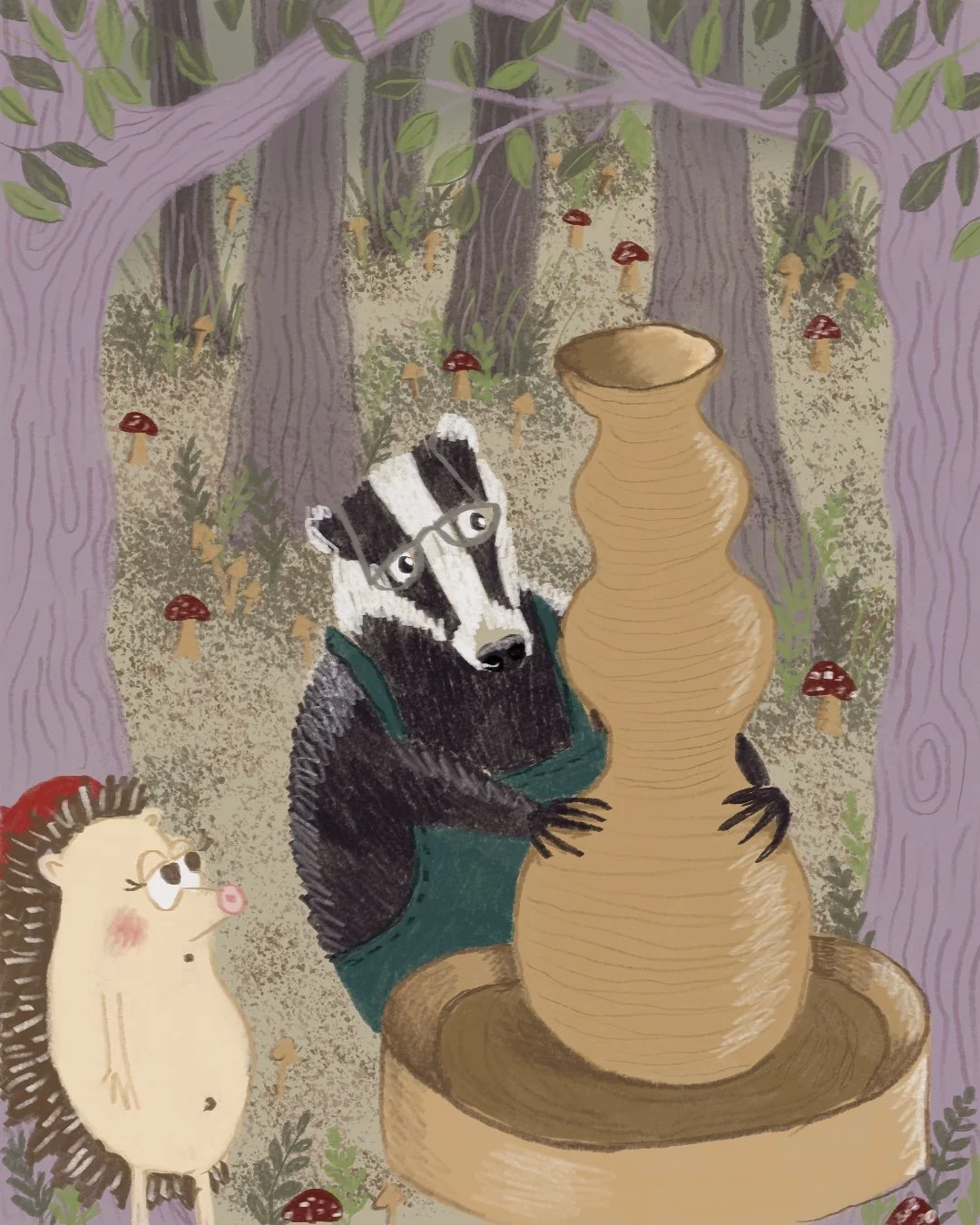
Art is something you can ‘learn’, not a mysterious talent that is bestowed on the lucky few
Keep honing that ‘talent’!
It’s easy to buy into the belief that success requires talent. But the more I think about it, the more I suspect that “talent” is often just what other people call sustained practice, persistence, and the courage to keep going when the outcome is uncertain.
I once read that part of the reason that singer song-writers like Taylor Swift and Ed Sheeran became so successful is that they started practicing in public from a young age. They honed not only their craft but their confidence in front of an audience. I’m still cringing at the thought of “being seen” a lot of the time, and I barely have any followers, but that feels like the real question now: not whether I’m talented enough, but whether I’m brave enough to keep trying, experimenting, and potentially failing in public.
What do you think?
Is artistic talent innate and for the lucky few?
What areas are you practicing to become more ‘talented’ in?